
Leveling Up Your Mind: The Surprising Science Behind Gaming

Leveling Up Your Mind: The Surprising Science Behind Gaming
For decades, the narrative that video games are brain busters surged through the cultural ecosystem. You’d hear outlandish phrases such as “Get off that game, it will rot your brain away!” with the utmost seriousness at hand. The catalyst of which was likely due to the early studies that took place in the 1980s and 1990s, which often focused on the potential negative effects of gaming, such as aggression or addiction. However, as gaming became more mainstream and diverse, researchers began to uncover a wealth of potential cognitive benefits.
From enhanced problem-solving skills to increased neural plasticity, more recent research reveals how video games can shape our cognitive abilities in ways that extend far beyond the virtual realm. It’s a concept that has captured the imagination of researchers, parents, and gamers alike, sparking heated debates and groundbreaking studies. So maybe we were right to throw our tantrums when we were told to get off the games, our parents simply could not comprehend that we were trying to increase our cognitive abilities! Take that, Mom!
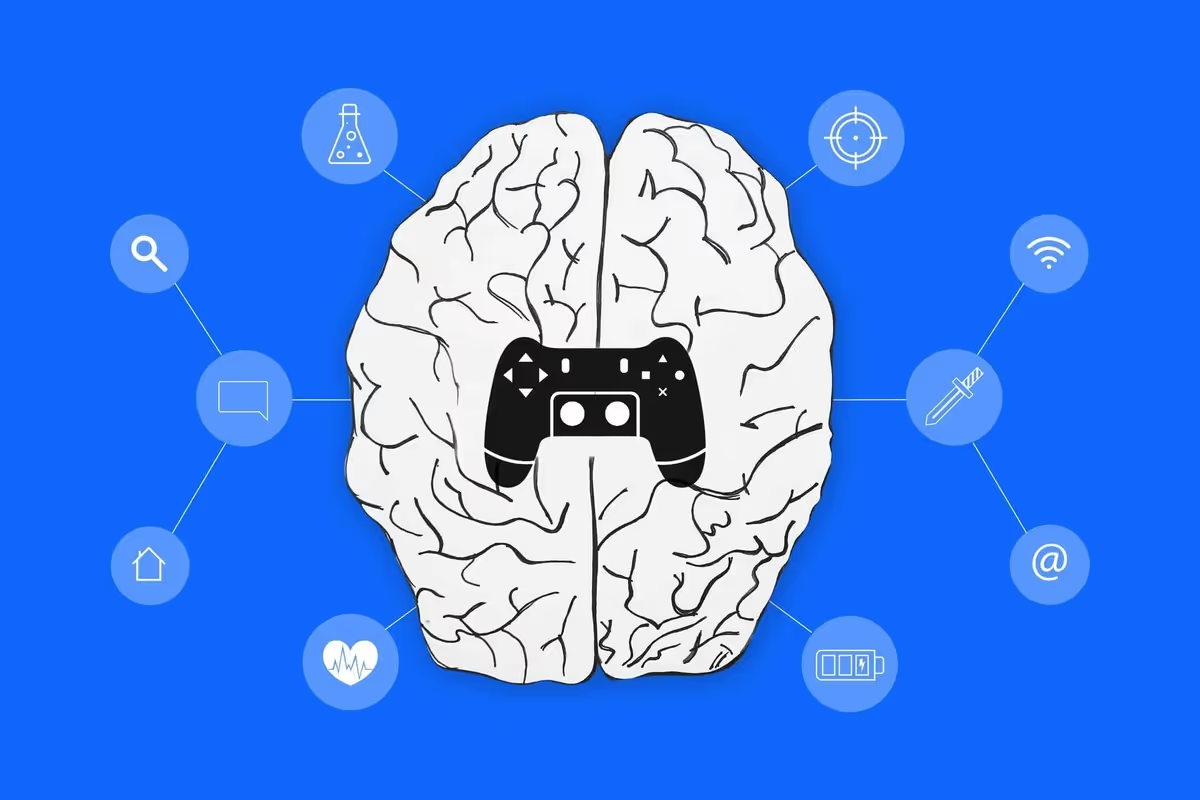
You may be wondering what sorts of cognitive abilities could result from gaming, and while playing Call of Duty or Rocket League for six hours on end won’t turn you into a rocket-scientist/mega-genius, there are some very interesting benefits that can potentially come with hitting the sticks for a while.
It’s important to note that the extent to which video game play alters the brain and cognition depends on many factors, such as age, amount of time spent playing video games, and what kind of video games are played. For instance, while playing video games does seem to have at least a small positive effect across all ages, video games tend to improve cognitive functions more in younger adults than in older adults over the age of 65
Similarly, while any duration of video game play likely leads to some brain changes, research suggests that the more time individuals spend playing video games, the larger the changes will be. Critically though, all the available research suggests that binging on video games (playing for very long sessions) is not a good idea. Video game play most powerfully affects the brain in a positive way when the play sessions are distributed across a wide range of time.
With these factors in mind let’s discuss, in depth, more of these benefits.

Did you know studies show that, over time, gaming can morph you into mega-mind? Not really but kind of…hear us out. Engaging in the playing of video games may not turn you bad, blue, and brilliant but regular gaming really has been linked to structural changes in the brain! For instance, research has shown that gamers of action games frequently have more gray matter in brain regions linked to fine motor skills, strategic planning, and spatial navigation. Their ability to play video games seems to have caused their brains to physically expand! How cool is that?!
Additionally, neuroplasticity refers to the brain’s ability to form new neural connections and modify existing ones in response to experiences and learning. It’s the reason why we can learn new skills, form memories, and adapt to new situations. And guess what? Video games are like a chug jug for your brain!
Despite what your parents may have told you, playing video games involves more than just staring at a screen and mindlessly punching buttons. In reality, you're engaging your brain in a variety of intricate ways. Your brain circuits are being altered by every obstacle you face, every new ability you acquire, and every virtual environment you explore.
Okay, so gaming isn’t a one-way ticket to “rotting your brain” but it’s also not an OP health blue-shield either. Like anything indulgent and enjoyable, the impact all depends on balance.
Extended gaming sessions can reduce physical activity, which over time contributes to stiffness, poor posture, and a whole host of other negative health outcomes. Pair this with energy drinks and late-afternoon marathons, and you’ve got a recipe for fatigue and unrealised aspirations.
We all know that blue light is a sleep killer and if you’re not already in the know…you’re tv or PC that you’re gaming on most likely emit a considerable amount. Couple that with adrenaline spikes, and the classic “just one more round” philosophy that we have all adopted at one point or another, and you can kiss a good night's rest goodbye.
Many modern games are intentionally created to keep you hooked through reward loops, micro-goals, and variable reinforcement schedules. This doesn't automatically mean you’ll get addicted, but it does mean it’s easier than ever to lose track of time and to let gaming edge out other responsibilities
So, yes—gaming can sharpen your mind. But it can also drain your energy, disrupt your routine, or even mess with your mood if you don’t keep it in check. Everything in moderation, friends.

Here’s where it gets exciting—gaming isn’t just a hobby, it’s becoming a legitimate tool for all kinds of real-world applications such as education, health and therapy.
Gamified learning platforms use principles from video games such as instant feedback, leveling systems, and goal-oriented tasks to help keep students engaged. Educational games have been shown to improve memory retention, motivation and conceptual understanding.
Motion-based games and VR platforms are used to help patients regain motor skills after injuries or strokes. The interactive environments keep rehab from feeling like a chore and the real-time feedback boosts progress.
There have been numerous findings in recent years that point to the surprising notion that surgeons who engage in regular videogame play, ultimately have a higher concentration of successful surgeries compared to surgeons who do not.
One such study made some very intriguing findings. It found that video game skills translated into higher scores on a day-and-half-long surgical skills test, and the correlation was much higher than the surgeon's length of training or prior experience in laparoscopic surgery.
Out of 33 surgeons from Beth Israel Medical Center in New York that participated in the study, the nine doctors who had at some point played video games at least three hours per week made 37 percent fewer errors, performed 27 percent faster, and scored 42 percent better in the test of surgical skills than the 15 surgeons who had never played video games before.
Video games—especially those that encourage strategy, memory, or spatial navigation—are being used to help older adults maintain cognitive function. Some studies suggest gaming may slow certain forms of cognitive decline, which is huge given our aging population. We’re not saying that playing a game of Tetris is actually the real fountain of youth, but what we are saying is that it really could have an impact.
Gaming, when used intentionally, becomes more than a pastime. It becomes a tool—one that blends fun with real world impact.
So, does gaming rewire your brain? In many ways, yes. It’s not magic or wishful thinking—it’s neuroscience. Games push your brain to adapt, learn, and sharpen itself through constant feedback, challenge, and exploration. They can enhance cognitive skills, bolster neuroplasticity, and provide emotional and social benefits that go far beyond the controller in your hands.
But just like any powerful tool, gaming comes with responsibility. Balance matters. Intentionality matters. And understanding how different games affect you physically and mentally matters just as much as trying to get your K/D ratio to a 2.0. Ultimately, gaming isn’t about rotting your brain—or turning you into a super-genius. It’s about harnessing a modern form of play that, when used wisely, can contribute to a healthier, sharper, and more connected you

